Full Auto: Tool or Toy?
Do full auto or similar capabilities actually add value if we are forced to defend against terrorism, foreign invasion, active shooter scenarios, or any of the other plethora of potential real world threats?
Part I: Weapons Systems and Employment
We all see it, and we all love it: the image of Rambo blasting away with his M60 machinegun. The heroes of WWII, and the cops and robbers of the 1930s, annihilating their enemies with iconic Thompson submachineguns. The iconic gunfights in Heat and other features of the silver screen. There's no doubt that full-auto is cool. However, due to legislation of yesteryear, true full auto is also unobtanium. Unless you have a very specific set of licenses that are somewhat expensive to maintain, which are only issued to members of the firearms industry, or unless you have sums that begin around $20K and end—God knows where– to spend on a transferable machinegun, then under our current legal structure you will spend a lengthy prison term, and probably have your dog shot by the ATF, should you choose to exercise this part of your second amendment rights.
Fortunately mechanisms like forced reset triggers (FRTs) are changing the game. This technology, although not technically full auto, brings analogous benefits. This puts our overlords in a somewhat tenuous legal position similar to the pistol brace fiasco during the last Presidential administration. Pistol braces became so proliferated that they became almost impossible to regulate. This in turn made the SBR provisions of the NFA nearly obsolete. It is possible that FRT technology may be putting us on the same path in the full auto realm. Whether this assessment is true or overly optimistic, it begs the question of whether FRTs, or legit full auto for that matter, are actually useful to those of us who value the second amendment.
Obviously there’s nothing wrong with cool and fun, but what about real world defensive usage? Do full auto or similar capabilities actually add value if we are forced to defend against terrorism, foreign invasion, active shooter scenarios, or any of the other plethora of potential real world threats? I think to answer this question we need to consider four things:
1. What full auto systems are out there, and what were they really good for anyway?
2. Which of these systems might serve us, the concerned citizenry, in a more serious use case?
3. What kind of training is needed to make something like this an asset instead of a liability?
4. Given the fact that FRTs are a typically a drop-in part, what should the criteria be for firearms modified this way to be considered “duty grade” as it were?
We’ll tackle the first two questions today, and the second two next week. First let’s talk about full-auto weapons platforms themselves.
Machinegun 101: What is a “machinegun?”
Enter the General Purpose Machinegun
First, let’s cover some basics: what is a “machinegun?” The ATF considers anything with full-auto capability a “machinegun.” In the military context this is laughable. If you were on a reconnaissance patrol and you radioed up that an enemy element was armed with a machinegun and in reality it was a bunch of bad guys walking around with full auto AK47s, you would be guilty of giving a false report. In the military context a “machinegun” is a belt fed, full auto system, usually with a quick change barrel, and usually (there are exceptions) firing from an open bolt. They are specifically designed to deliver sustained fire. In the military, when chambered in full power cartridges such as 7.62x51 or 7.62x54R, these become “General Purpose Machineguns” (GPMGs). This term allows differentiation from heavy machineguns, light machineguns, and automatic rifles. The GPMG is typically considered the most casualty producing weapon of the infantry platoon, and functions as fire support or a base of fire for maneuver elements, raids and ambushes etc. It is typically run by a crew of two soldiers due to the weight of the ammunition, the tripod, and the T&E (traverse and elevation) mechanism. Examples of the GPMG would be the M240B or PKM. When run by a good crew (the USMC and Army Rangers come immediately to mind) and employed by good leaders (remember, combat is a team sport) the GPMG might just be the most lethal small arm on the battlefield.
Heavy Machineguns
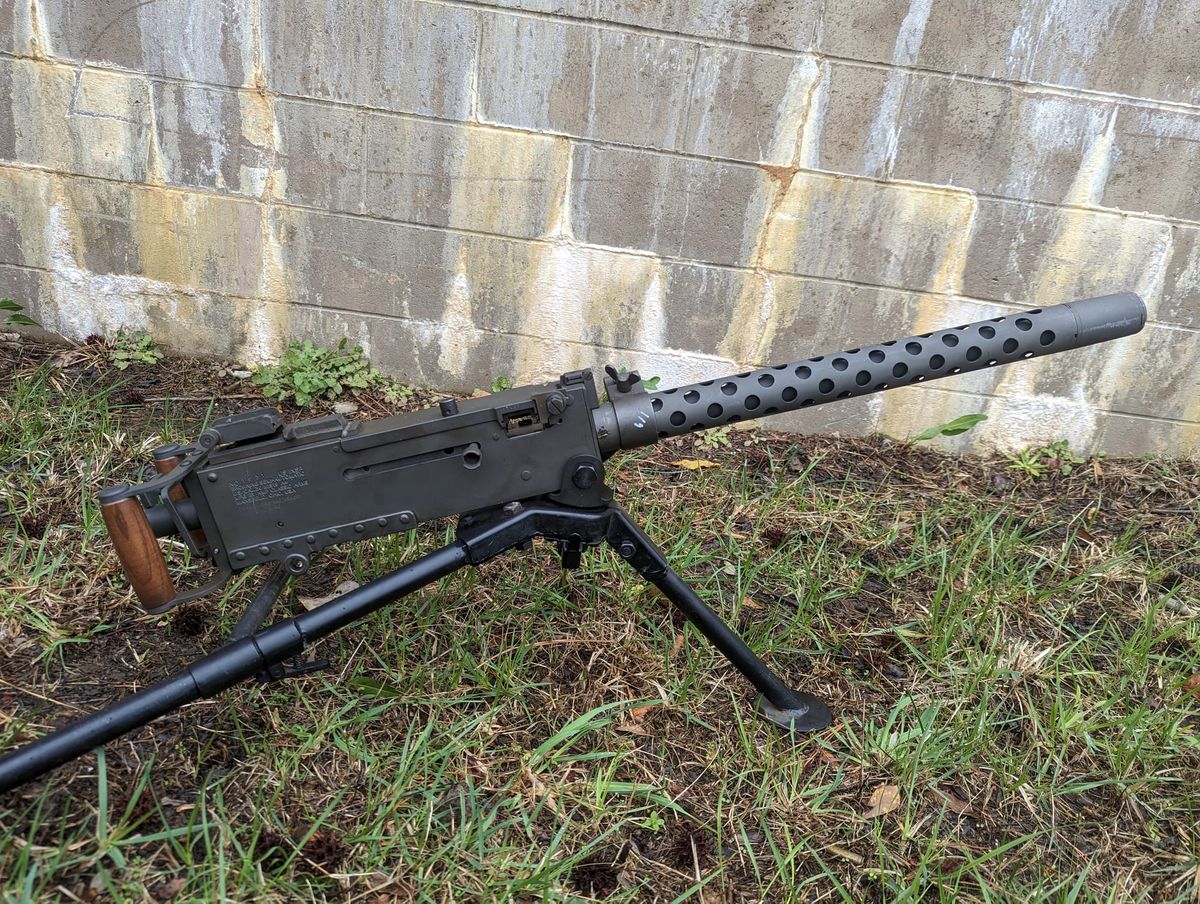
Generally speaking heavy machineguns are chambered in .50 BMG or 12.7 Russian. Technology is starting to blur the line between heavy and general purpose machineguns, but that is not the subject here! The most proliferated heavy machineguns by far are the Russian DShK and the American M2; the latter being the iconic “.50 cal.” recognizable in movies and video games, and on battlefields, across the world. Enough said.
Light Machineguns and Automatic Rifles
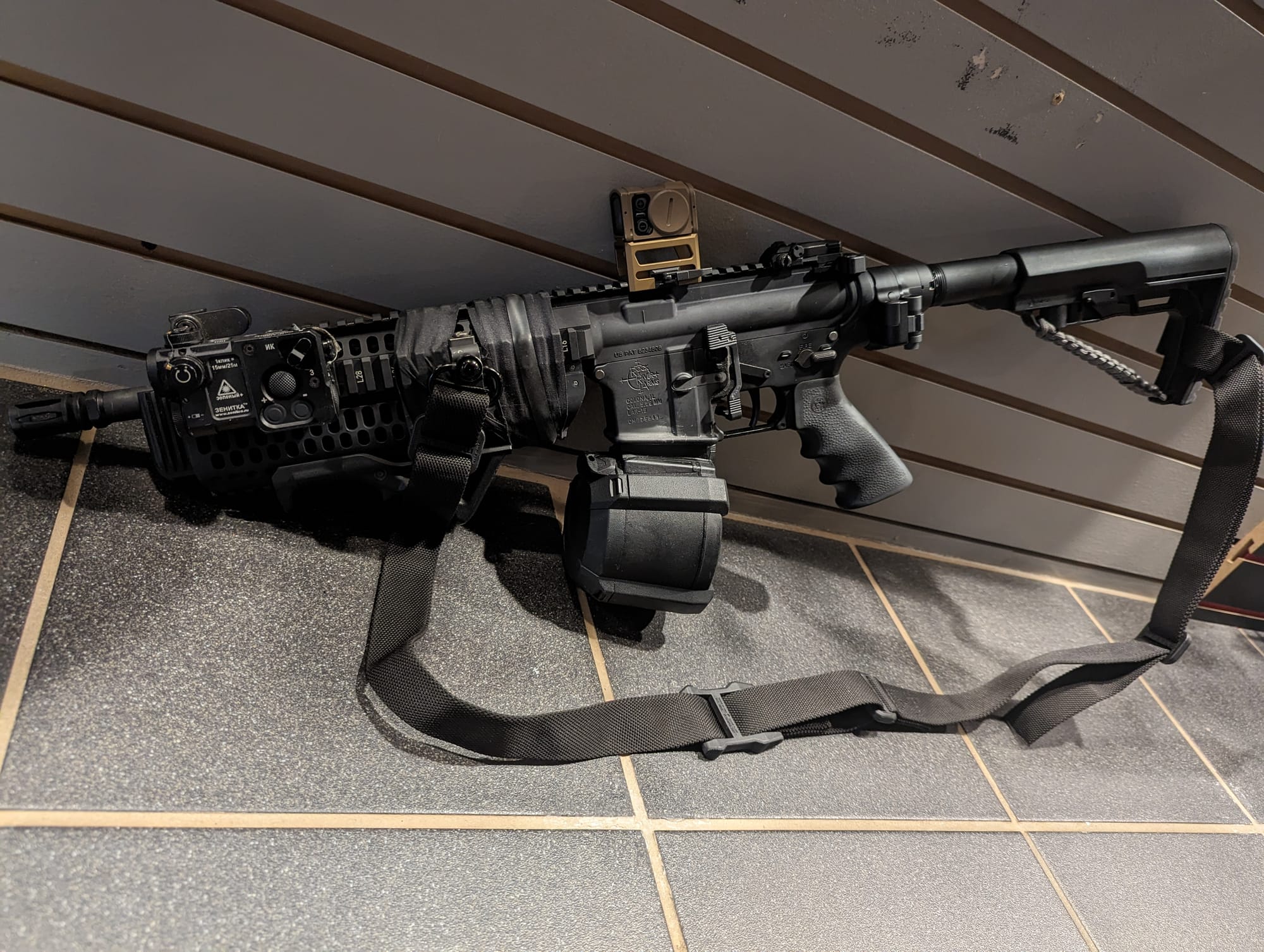
Light Machineguns and automatic rifles both give additional firepower at the squad or fire team level. They are maybe best thought of as “non crew served” machineguns. They usually chamber an intermediate cartridge like 5.56 NATO or 7.62x39, and they give fire teams and squads a machinegun without having the mobility drawbacks of a full sized general purpose machinegun. Again, there are guns, or even units and tactics, that blur these lines, but for these purposes we’ll keep it simple. The bottom line is that a light machinegun keeps most of its bigger brother’s lethality, and can be run easily by a single soldier and used for room clearing and other high-mobility tasks. Light machineguns and automatic rifles are a huge lethality boost to small units like infantry squads, small special operations elements, or even the small kill teams (essentially enlarged sniper teams) of the Iraq war days. The utility of these weapons has been recognized since the BAR of WWII fame.
The primary difference between a “light machinegun” and an “automatic rifle” is really that an LMG is truly built for sustained fire i.e. belt fed with a quick change barrel, whereas an automatic rifle is more of a heavy duty assault rifle that is built for full auto employment, but is going to fall short in a true sustained fire application due to design factors. The most proliferated LMGs today are likely the US M249 SAW, and the Russian RPD, although the RPD, unlike the SAW, doesn’t have a quick-change barrel. Examples of automatic rifles would be the USMC’s Infantry Automatic Rifle (IAR), an adaptation of the HK416, the Russian RPK-74, or in history, the BAR. Operationally, light machineguns and automatic rifles are employed somewhat interchangeably, it’s just a trade-off in terms of true “machinegun” functionality (sustained fire, use with a tripod etc.) vs. something that’s lighter and functions better as a rifle for point target engagements, CQB, etc.
The Dreaded "Assault Rifle"
This brings us to assault rifle and sub-machinegun/PDW/machine-pistol type systems. For purposes of this article we will call full auto carbine platforms like the M4, AK47, AK74, etc. “assault rifles.” There’s a reason for this. In WWII there was a requirement for something that was the “best of both worlds” between the pistol caliber sub-machineguns and the full power battle rifles of the day. That solution, the granddaddy of our modern M16s and AK47s, was called an “assault rifle” because it was made for “assault” or shock troops who needed such a weapon. Since that time light weight rifles chambered in intermediate cartridges have become the standard infantry rifles of the entire world.
HOWEVER, herein lies the rub. In the modern world most firearms trainers, and for that matter most competent militaries, would consider the full auto capabilities of the assault rifle platform of limited use at best, and a tactical liability at worst. This is why the US army made the M16A2 and the M4 carbine as 3-round burst weapons instead of full auto (the M4 was later revised back to full auto for SOF with the M4A1, which was a struggle of its own). It’s also why the Russians put the full auto setting of the AK selector in the middle: so that in an adrenalized state when a soldier put his weapon on “fire” it would end up on semi, not full auto.
Here at the range we conducted an experiment where we tried to see from what range we could keep all rounds on a silhouette. We found that about 20 yards was the limit with a Daniel Defense M4A1 (configured almost exactly as the US military configures theirs), and less with a full auto AK47. We considered anything on the silhouette to be a hit, not just in the A-zone. Considering the fact that with modern semi auto carbines an expert shooter can consistently put four out of five rounds in an A-zone at 20 yards in 2.5 seconds, and at closer ranges competitive shooters regularly shoot .25 second split times, the efficacy of full auto in all but very specific situations starts to come into question. I did multiple combat tours in Iraq and Afghanistan, and not a single American combat veteran I know regularly, or maybe ever, ran their M4A1 on full auto. It’s just easier to make the bullets go where you want them to on semi, and American soldiers are trained to use aimed fire.
Sub-Machineguns
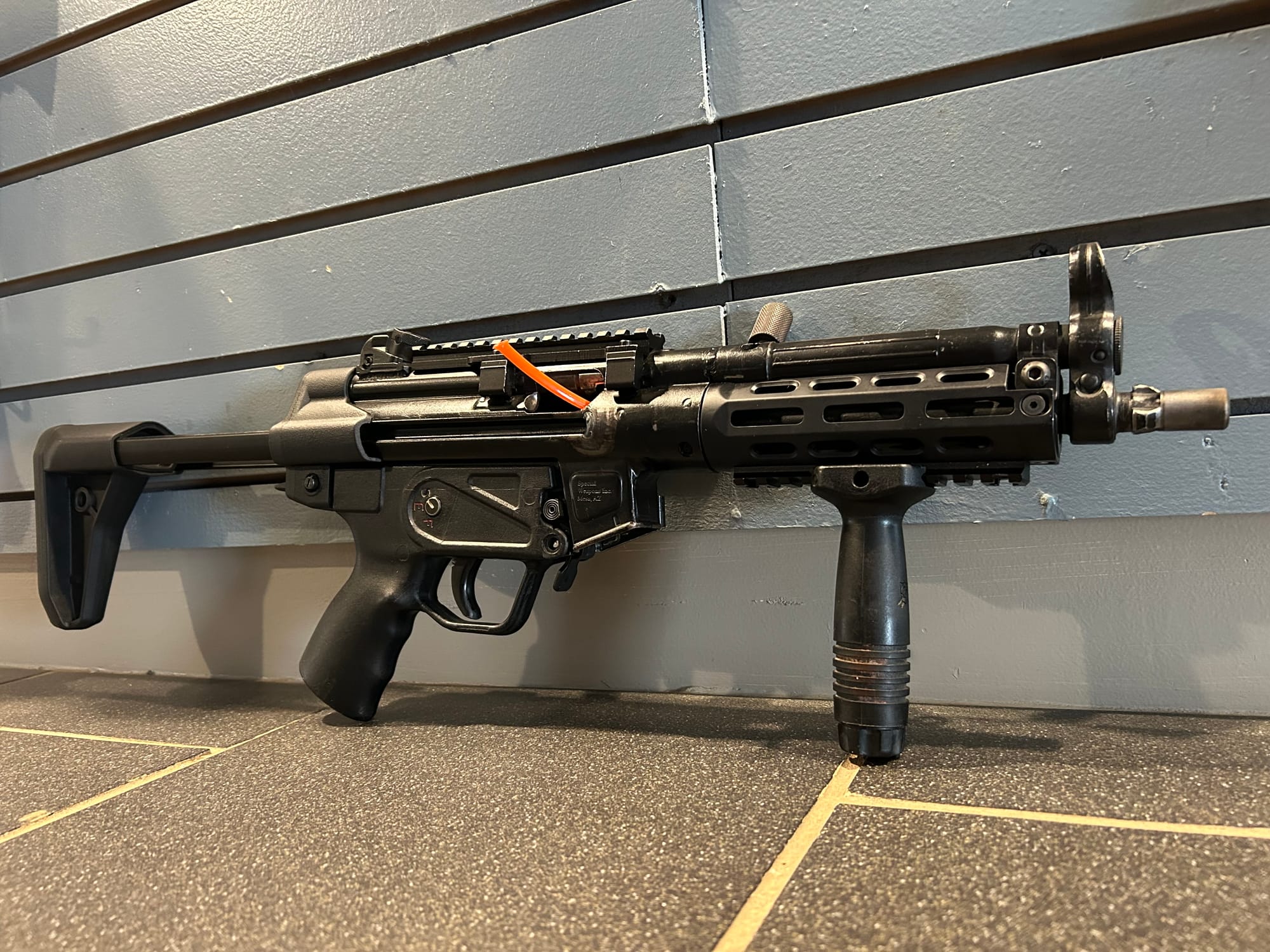
This brings us to things like sub-guns and PDWs (so-called personal defense weapons). Books can and have been written on the history and permutations of these, so we’ll keep it simple. Bottom line up front: sub-machineguns shooting pistol or other miniaturized (looking at you 5.7) cartridges bring less lethality per round than a carbine chambered in a rifle cartridge like 5.56 NATO…but…modern sub-machineguns are half the size of a carbine, and the recoil is minimal. This means that a well-designed, modern, sub-gun with a well-trained shooter can repeatably dump 5-round bursts into an A-zone at normal CQB distance. 5 rounds of 9mm center-chest in .5 seconds is some serious lethality. Give me a gun that can do that, AND can fold up and fit in a briefcase, and you’re speaking my language! Even better, most pistol cartridges are naturally subsonic in at least one of their configurations. Especially with modern ammunition and suppressor technology, this adds up to a very small, very lethal package with very real signature reduction. Let that sink in for a minute. In my opinion, with these little guns full auto becomes an asset. It means that you go from something that is compact but also somewhat under-powered, to something that is compact and ALSO has near-12-gauge levels of lethality. The caveat of course is that range is largely restricted to the CQB envelope, and that these attributes are completely dependent on a skilled shooter and a modern gun.
Conclusions: Tool or Collector’s Piece?
Conclusion #1: Sub-Machineguns = Good…with caveats
In the civilian context the threats are things like home invasion, October 7th style terrorism/active shooters, civil unrest or illegal checkpoints, or drastically increased crime due to temporary systems failure i.e. Hurricane Katrina. Long guns may need to be stored in small spaces, such as a vehicles or backpacks. They may be used in constricted spaces such as vehicles or small rooms and hallways. In most scenarios, engagement ranges will be quite limited. This is the domain of the sub-machinegun. My personal opinion is that sub-machineguns with full auto capability are superior to their semi-auto look-alikes given proper training, employment, and weapons selection. BUT if training is lacking or weapons selection is poor, sub-machineguns become a liability. Spray’n’pray may have been OK on Guadalcanal or in Vietnam, but in today’s civilian application it is unacceptable. More on that next week. Final food for thought: full auto especially shines in modern platforms that shoot very small caliber, low recoil, cartridges such as the HK MP7 and the FN PS90. In fact, some in military circles might argue that these cartridges are ONLY useful with full auto capability.
Conclusion #2: Assault Rifles = Not So Good…with caveats
In my opinion, and the opinion of most military organizations and combat veterans, combat carbines really shine in the semi-auto application. Even those who use these guns in high risk environments for a living, and have access to full auto platforms, almost always use their carbines on semi-auto. There is a reason for that. The exception would the handful of true automatic rifles that are specifically tuned, both in terms of operating system, barrel, and recoil impulse, specifically for effectiveness on full auto. An example of this would be the Colt Infantry Automatic Rifle, an automatic rifle version of the M4A1 built collaboratively between Colt and Knights Armament. These guns can be run in CQB like an MP-5 (at least by someone physically strong), while giving the operator a choice of using the gun as a rifle or as a light machinegun at distance. For a physically strong shooter with both CQB training and military machinegun employment training, something like this could be a real force multiplier given more extreme contingencies.
Conclusion #3: Machineguns are Awesome…but not for this
True LMGs and GPMGs are cool, but they are designed as sustained fire area-suppression weapons. In other words instead of focusing on a specific target, most of the time they saturate a cone of fire with lead. This is a huge asset in military combat and given the fact that the founding fathers specifically intended the American population to have military capabilities, I believe that these weapons are constitutionally protected, meaning that the current restrictions against them are violations of our founding documents. That said, in my opinion the current threat model for American civilians really does not include the team sport of true military combat, so I’m not sure how applicable these systems are for the purposes of this article, unless we are venturing into the space of armed resistance to foreign invasion or some similar threat.
Whether you agree with my opinions, or you maintain a different view point, be armed, and be trained! Next week we’ll talk about training and equipment requirements for FRT’s and full auto.