You're the Militia, So Now What?
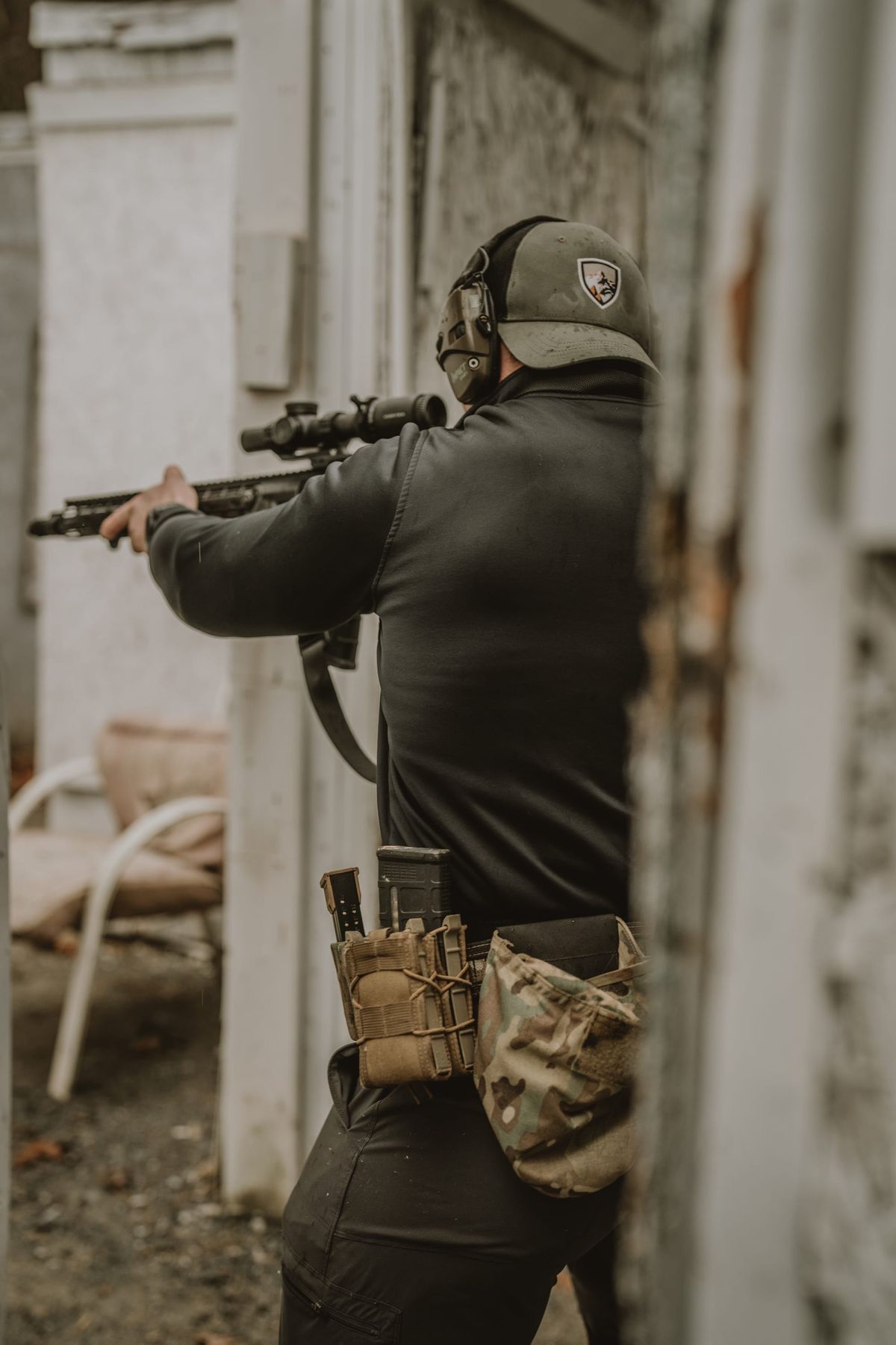
A 2nd Amendment Focused Training Philosophy
The founding fathers were abundantly clear in both the wording of the second amendment and the later clarifying letters and commentary they provided. The only holistically reasonable interpretation is that independent elements of the population are authorized to have a military capability. Period. End of story. There is no other historically reasonable way to interpret our founding documents. Decades ago, there was a large “centrist” element of the 2A community that followed the “2nd Amendment is for hunting” mindset famously endorsed by Bill Ruger. Since then, the Overton Window has shifted significantly, to the point where I know guys who refuse to buy Ruger firearms, even after the death of the company's founder, on 2nd Amendment grounds! As the owner of a shooting range I am regularly exposed to an extremely diverse group of gun owners, and I would say there's pretty much universal agreement that the 2nd Amendment is for defense. There might be disagreement about who, what, when, and where, but I'd say everyone agrees that guns are exactly what they are: weapons.
Where I see some big differences is when people actually go to the range. In my estimation (remember, this is nothing more than my perception based on what I see at work from week to week, so mileage may vary) I'd say that 90% of gun owners don't do much that I would classify as training. I'm not saying this as a moral judgment. I'm just saying that I've been seriously involved with firearms in one way or another, much of it professional, for a couple decades now, and that's my observation.
The natural human tendency with lack of training is think that should a life threatening situation arise we will rise to the occasion. Another way to describe this kind of wishful thinking is as a gap between real and perceived capabilities. The hard reality is that you will likely sink to your most basic level of training that has been most thoroughly inculcated. This is something the military has known for a very long time, and it's the reason why individual soldiers, and units of soldiers, are required to do demonstrate combat tasks to an objective standard, usually (in the case of unit) to graders who serve in a different unit, prior to deployment.
As responsible gun owners who care about the 2nd Amendment I believe we must close the gap between real and perceived capabilities, and while the first step to closing that gap may be objective measurement, this implies that we know what to measure. Army Marksmanship Unit champion and military trainer Dan Horner articulates this very well below. I think he's got a great point.
The title is ridiculous click bait, but his comments are brilliant!
To summarize Horner says that there's a lot of time wasted at the range due to unclear objectives. Guys don't know what they are practicing for or what standard to hold themselves to, so they're just sorta doing stuff 'cause they saw it on Instagram. I agree with his assessment, but it begs the question: If that's the wrong answer, what's the right answer?
On the bright side information is now democratized, and information is everywhere. There are many instructors, many training courses, Youtube and Instagram channels full of drills. Every instructor has their own take on what their standards should be. Throw in a few financially motivated cults of personality, conflicting backgrounds and perspective, some resume worship, and a standard dosage of straight up bad ideas, mixed with some outdated ones or good ones taken out of context, and you get a pretty confused landscape.
Personally, I tend to be principle based. I like to start with a set of general principles, and then expand from them into specifics. So if we're going to eventually delve into the specifics of combative marksmanship and related skills, let's start with some guiding principles. The five listed below are ones that I believe in, although I am certainly not the first to articulate them.
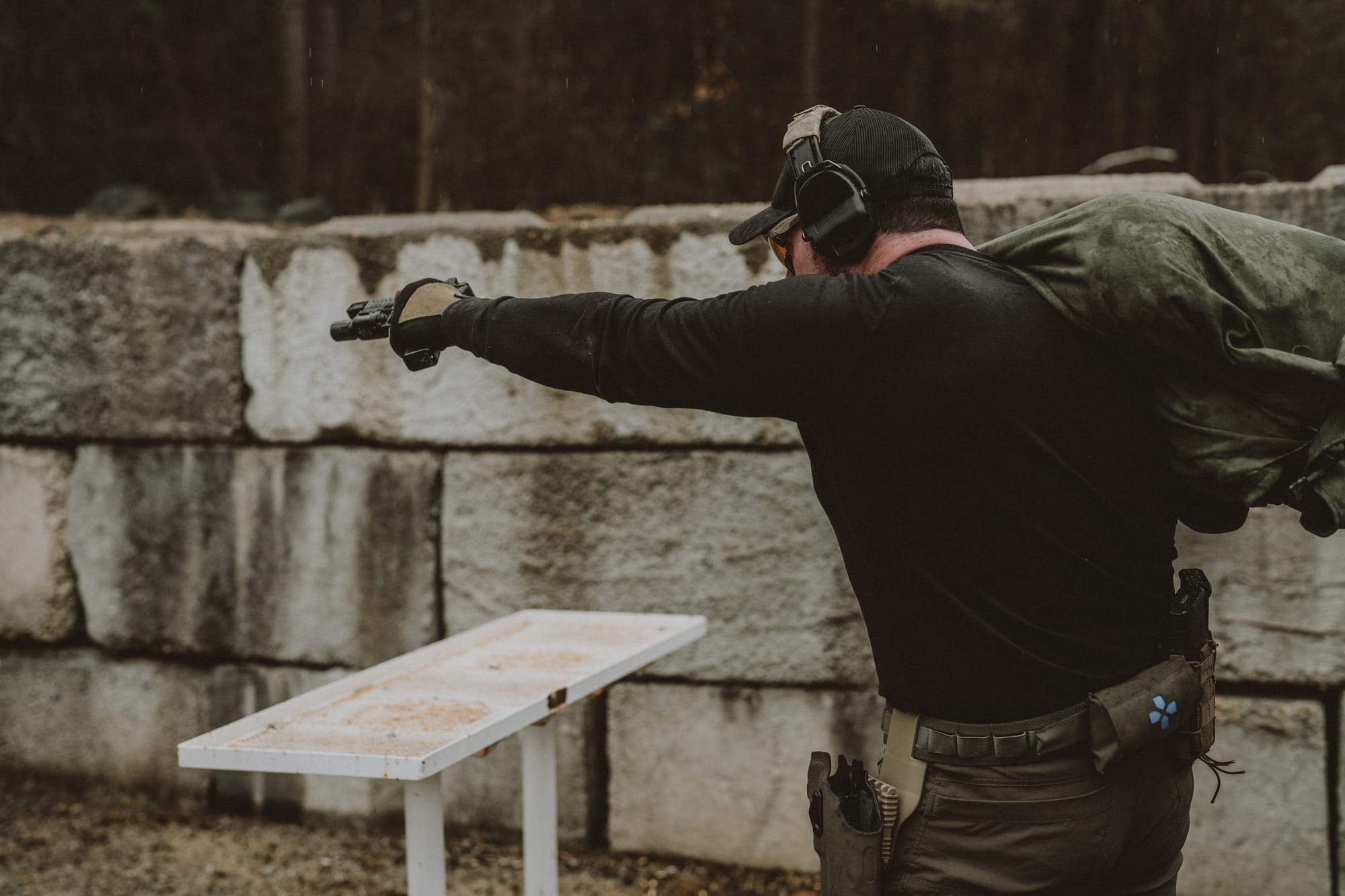
- Fighting is fighting. We don’t build shooters, or martial artists, or knife guys, or stick guys. We build competent fighters. Guns are a tool and shooting is the skills set of using that tool. Grappling is the skill set you need should the fight go to the ground. Boxing is the skill you need should you have to punch someone. The USMC likes to say that the Marine Corps Rifleman is the most advanced weapon system on the planet. We like to maintain a similar mindset. It’s not the equipment, or the specific skill set, it’s the fighter with the skill set using the right tool for the job.
- Real world survivability is based on multiple skill sets. At a minimum I believe you need a hand-to-hand skill basis, skill with the firearm(s) you plan on using, and emergency medical training. You need to maneuver inside a structure with your weapons, and you need to use your skills in low light or other adverse conditions, such as under physical stress.
- Hard skills must be interoperable. In other words the hand-to-hand skill set cannot be only applicable in a boxing ring or a jiujitsu dojo, it must work in civilian clothes confronting multiple attackers where weapons may be involved on both sides. Similarly, my pistol stance cannot only work during “stand and deliver” type flat range work, it must also work in the dynamic environment of structure clearing. All the systems and skill sets must work together.
- Techniques should be well sourced and applicable. The United States has been in something that resembles a permanent state of low level conflict since 9/11 2001. Between that, and the proliferation of MMA, full contact stick fighting, competition shooting, etc. there is a wealth of “concept laboratories” to draw from. The main issue is that not every concept is workable inside every mission set. For instance, there are many great competitive shooters out there, and competitive shooting is a great skill laboratory, but how much time do I need to spend drawing race guns from race holsters for time? Unless I plan on making competitive shooting into a side quest, probably zero. We need to select techniques to train that are well known to work in the specific context where we plan on using them. Finally, whatever we are doing should be proven to work in the context we are using it, and just because a guy with great credentials teaches it, does not mean that it is useful in our particular context.
- Training must produce measurable results. We need standards. Exactly what the standard is and whose standards should be adopted is debatable, but it is non-debatable that serious students objectively measure their progress.
Next time we'll discuss what results I think we should be measuring, i.e. what I think a holistic, firearms-based, combative skill set looks like, and how we could define some bench marks, for a basic, intermediate, and advanced trainee. Until then be armed, be trained, and I'll see you on the range.