You're the Militia, So Now What? Pt. II
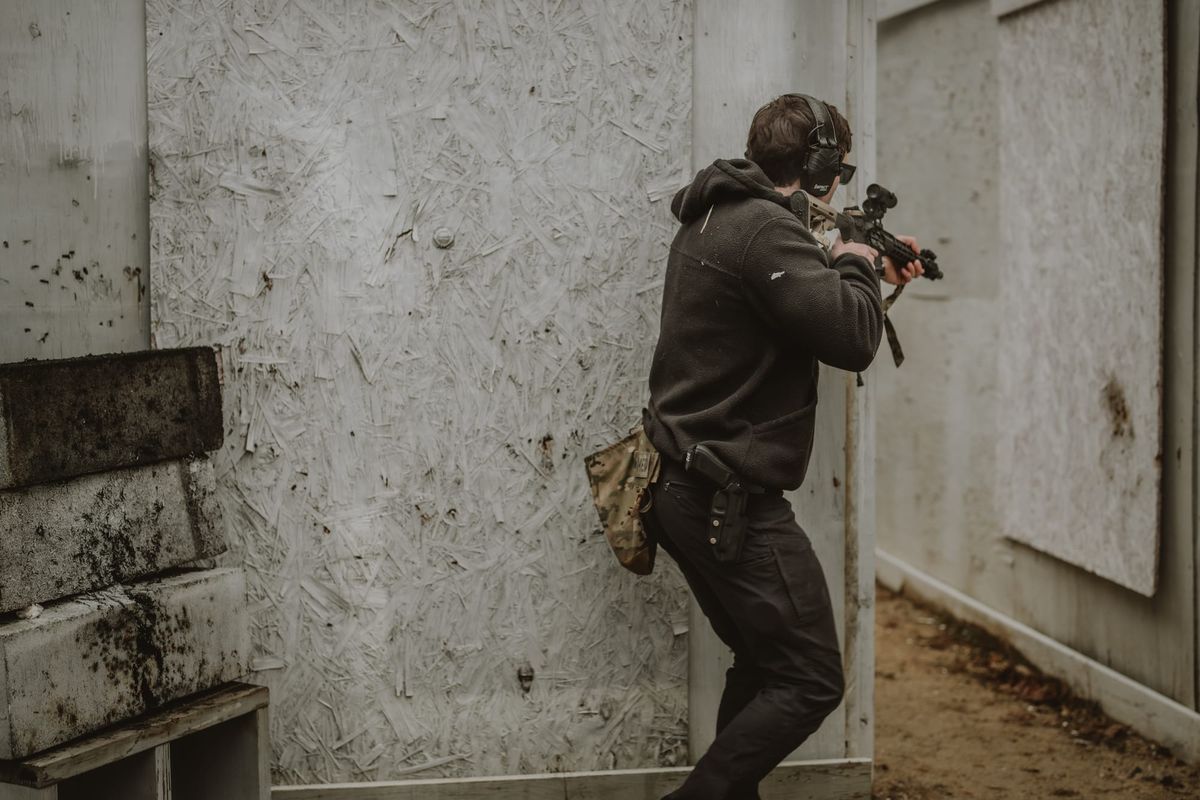
Comprehensive Training: What is "Tactical Shooting"?
In our last blog post we discussed some basic principles of combative training. That material is HERE.
Summary:
For those of us who take the 2A seriously there’s often a need to graduate from “just doing something” on the range, to actively training toward a result. I believe that in order to make the jump from recreational “training” to combative training with the intent to preserve life we need a principle based approach. The principles that guide me, and our training approach here at the range are as follows:
1. Fighting is fighting. In other words: it’s the Indian not the arrow.
2. Real world survivability is based on multiple skill sets. In other words: just knowing how to shoot is not enough.
3. Hard skills must be interoperable. Fundamental skills must work day, night, static, dynamic, etc.
4. Techniques should be well sourced and applicable.
5. Training must produce measurable results
Training Objectives:
So now that we have some principles in place lets break down what we consider to be a basic, intermediate, and advanced skill levels for a holistically trained "tactical" or combative shooter.
Basic Shooter
The goal of the basic shooter is to competently manipulate the firearm and make bullets consistently hit relatively close targets, and to establish a baseline set of combative skills. This would be a list of goals for someone at the introductory level of combative training exposure.
1. Can statically engage close targets. For our purposes “close” is 10 yards and in with a pistol and 100 yards and in with a rifle. The shooter should be able to deploy their weapon and repeatably make vital zone hits. They should know where vital zones are, and have some trained procedure for how to engage them.
2. Can safely and smoothly execute fundamentals, measured by a generously timed drill set. In other words, this shooter should be able to smoothly execute all the basic manipulations associated with their chosen weapon system (reloads, malfunction clearance, etc.) and should be able to repeatably shoot some basic drill sets (el president, Mozambique, whatever) making vital zone hits. It doesn’t have to be too fast, but it should be smooth, safe, and repeatable.
3. Can move to cover and engage from cover. The shooter should know how to use cover and shoot from it.
4. Understands legal use of force concepts, has made the ethical decisions of when they are and are not willing to use lethal force.
5. Understands the basics of visual target discrimination
6. Has some basic and effective unarmed self defense skills that they can execute effectively
7. Can demonstrate basic hemorrhage control techniques and can make can evaluate when or when not to use these techniques.
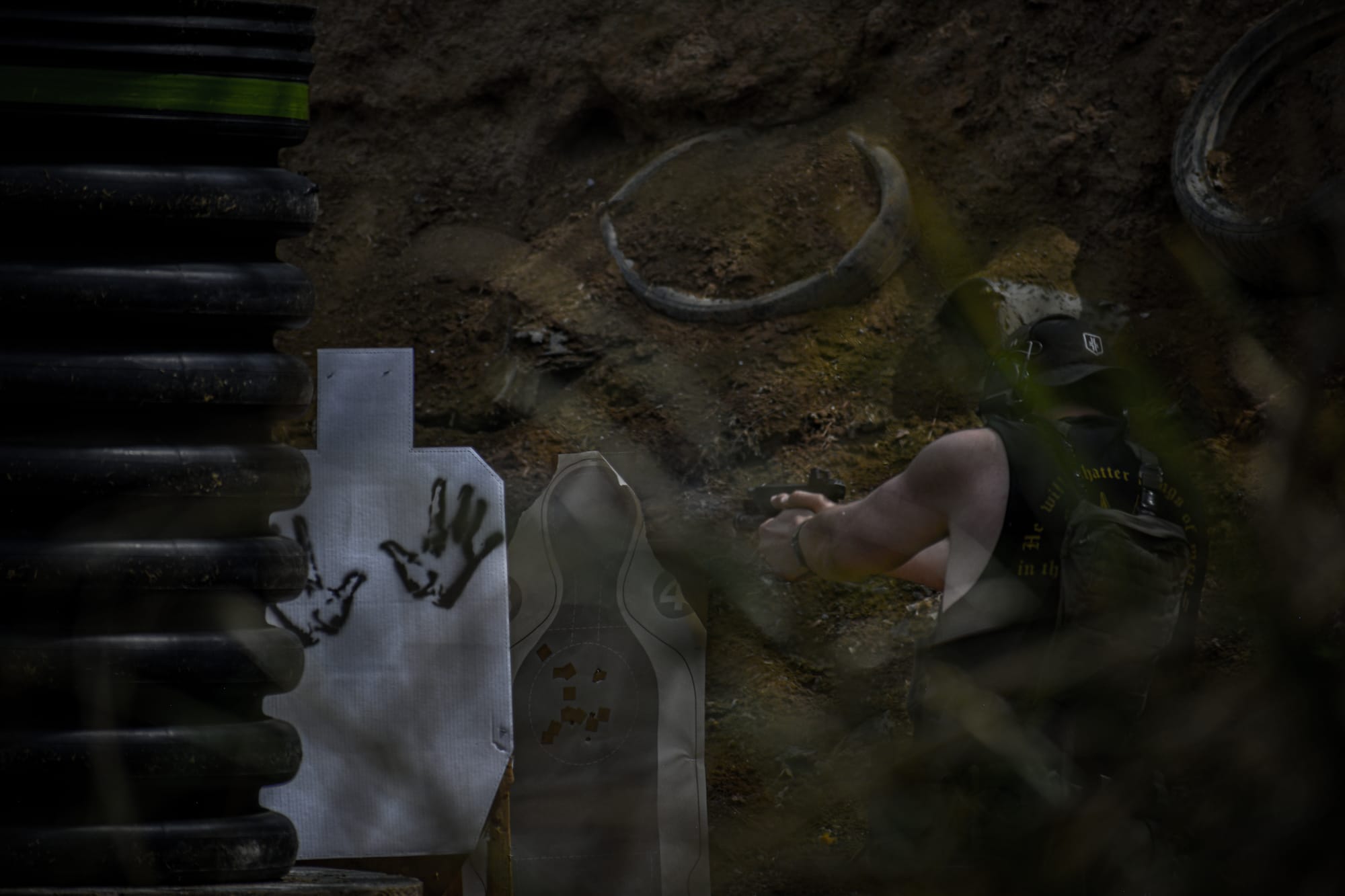
Intermediate Shooter
I consider the intermediate level the place where the shooter can competently manipulate the firearm and execute basic fundamentals and is learning more combative skills, refining fundamentals, extending engagement distance, and beginning to apply fundamentals under more serious time pressure. Demonstrates fundamentals by running drills to a moderate time standard. At the intermediate level I think we should be taking the clock somewhat seriously and striving for some better drill times.
This is also the level where I consider that we begin to differentiate between true combative shooting and serious, sanctioned, competitive shooting in terms of training goals and associated allocation of time and money. For instance there’s probably no path to USPSA grand master without a fast bill drill. Split times are important in competition. Conversely a friend of mine drew at the muzzle of an AK and shot a bad guy three times in the chest and once in the head with a Beretta M9. We were deployed together (both involved in the same incident actually) and we hardly ever worked with shot timers back then. We were probably shooting something like half-second splits and thinking we were going fast! What saved my friend’s life was the fact that he acted decisively, he had a reasonably fast draw, and he hit center chest with the first shot. After that I’m not sure fast splits mattered that much. He just kept doing what we were trained to do and it worked.
So if a shooter has a sub-two-second bill drill but can’t get up a flight of stairs without getting out of breath, I’d prescribe less bill drills and more reps in the gym if defense of life is the actual objective. If winning competitions is the objective, I’d recommend the opposite. Of course, there’s the ancillary point that in modern America cheeseburgers and beer are statistically far more lethal than violence…but that’s another topic! …Anyway, the below is a list of goals for the intermediate shooter.
1. (Pistol specific) Can draw and engage while explosively displacing off the line of attack and reliably make hits at close range while doing so. There are other instructors who also teach this as a rifle and shotgun skill. I think whether or not we do this with long guns is somewhat relative to circumstance, but in my opinion it’s mandatory with pistols at a minimum.
2. Accurately and quickly engages multiple targets
3. Extend target engagement to the generally accepted limits of the weapon (25-50 yards pistols, 200-500 yards carbine, depending on equipment).
4. Can reliably make untimed surgical shots (3 in. target at 15 yards with a pistol, for instance)
5. Can make vital zone hits on the move at CQB distances
6. Maintains solid fundamentals under physical stress and under low light conditions.
7. Can target discriminate in dynamic environments
8. Integrates multiple weapons as needed (transition from carbine to pistol, check drill)
9. Competently utilizes basic medical skills under stress
10. Has basic combative knife skills
11. Has basic weapons retention skills
12. Capable of using some kind of hand-to-hand skill set (boxing, Muai Thai, BJJ, wrestling, Judo, Krav Maga…something) to solve non-lethal problems, or fight to their lethal tools if needed.
13. Understands and can apply the basics of single operator structure clearing
14. Can competently use their weapon in and around vehicles
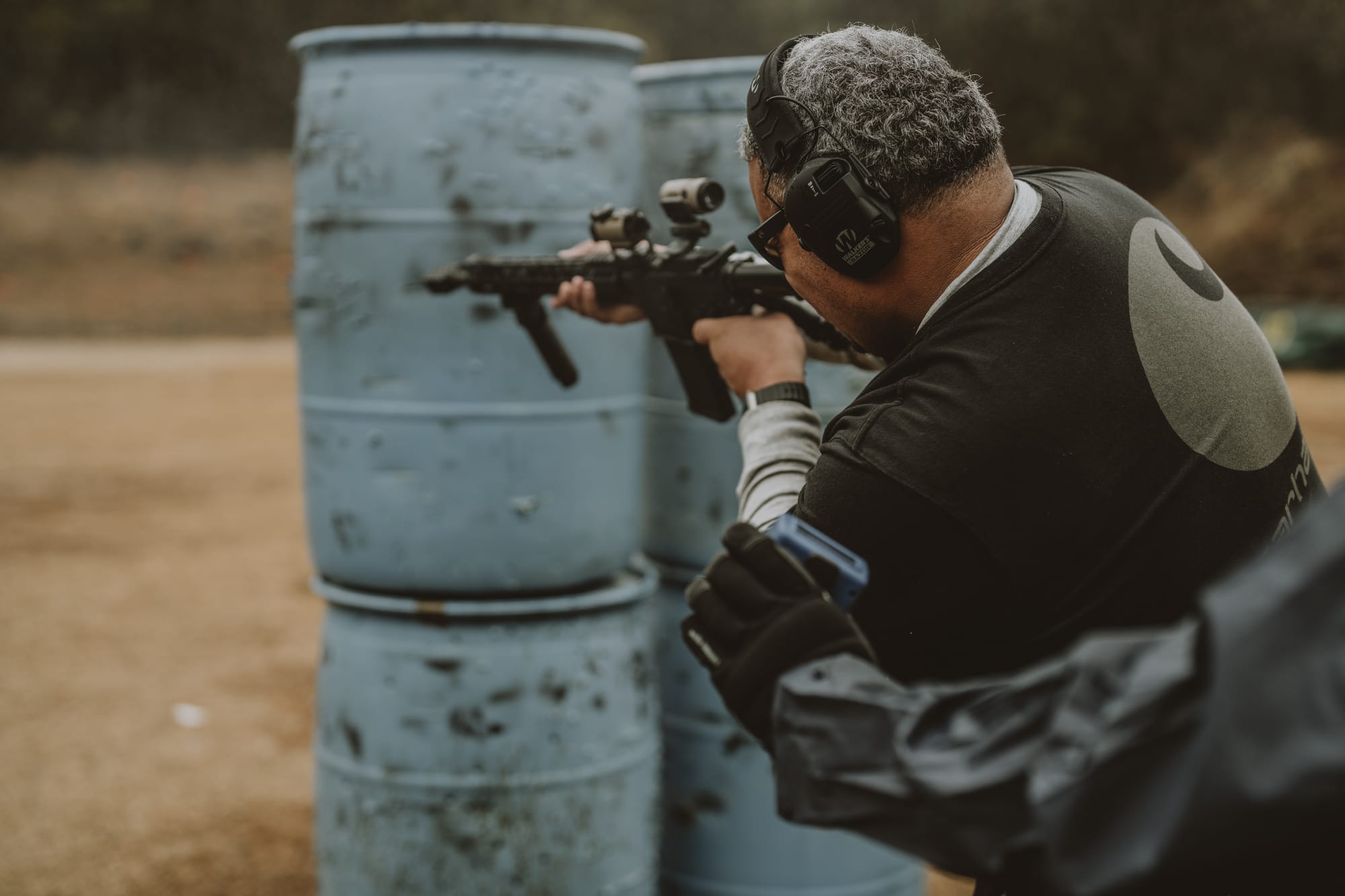
Advanced Shooter
In my mind the difference between basic and intermediate is adding more skills. The difference between intermediate and advanced is greater competency at existing skills. At some point it’s hard to really be advanced as a generalist, and if you’re really passionate about weapons craft you will inevitably develop more expertise in one thing than another. There can also be a level of diminishing returns where a specific area of the combative arts becomes expertise for the sake of expertise, and perhaps less combatively relevant. I would put striving for sub .15 second pistol split times, black belts in traditional martial arts, knife and sword dueling type martial arts, etc. in this category. There’s nothing wrong with any of this stuff, we just need to admit when we’re going on a side quest because we think something is cool! To me, an advanced practitioner of the combat arts looks like the following:
1. Executes fundamental drills under rigorous time standards
2. Shoots surgically under time pressure
3. Can push a given weapon system to its generally accepted limits of effective range under time pressure
4. Can do all of the above under physical stress and in low light (if technical capabilities exist to do so).
5. At CQB distances maintains fundamentals under highly dynamic conditions such as explosive displacement off the line of a knife attack, dynamic entry through a doorway, or a sudden stop from a full sprint
6. Demonstrates proficiency at single operator structure clearing (and potentially team based structure clearing) given differing problems and situations.
7. Can rapidly target discriminate while dynamically clearing a structure or dealing with an evolving situation where physical use of force may already be in play.
8. Fully integrates knife, gun, and hand-to-hand skills while demonstrating expertise in all three.
9. Has austere medical skills that go beyond the level of “stop the bleed” training
10. Makes sound situationally based medical decisions when rendering aid under stressful and chaotic conditions at the maximum limits of their scope of practice.
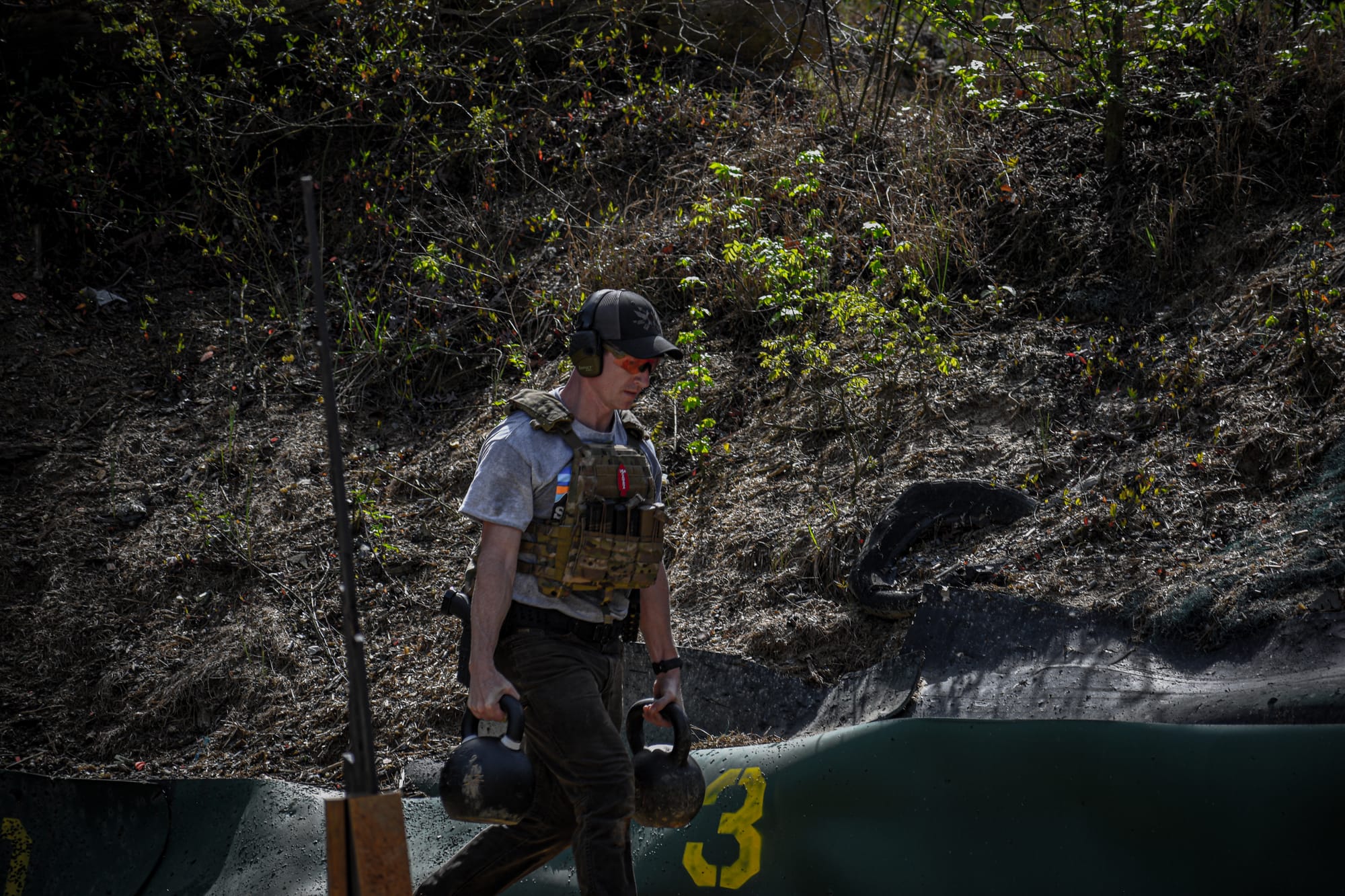
The Final Weapon
In the end there are two X factors that hold the key to the entire combative equation: physical courage and moral commitment. Technical and tactical skill is what makes one capable of doing the mission, but at the end of the day, no matter how good you are, fighting is scary and dangerous. Period. In order to voluntarily thrust oneself into lethal confrontation one must, at some level, be willing to die. In the moment one must possess both the physical courage to face the possibility of death, and ideally, the moral certainty that brings peace with either taking the life of another, or losing one’s own life.
There are, of course, men who love violence for the sake of violence; where violence is a sort of addiction, and there are men like this on both sides of the law, in and out of uniform, fighting both for and against the United States. This mentality and it’s consequences is well beyond the scope of this blog post, but suffice it to say this is not our preferred end state. What we seek is moral clarity and physical courage that leads to decisive action. Perhaps then this is the final discriminator: the man who trains for competition trains for pride, for skill, for the prize; the man who trains for combat practices to face something from which he may not return, and at some level he has made peace with that.
Last Role Call
Finally, as Memorial Day has just passed, I’d like to dedicate this post to a few who in fact did not come back.
Those from my infantry battalion killed on my first combat deployment to Iraq: Brown, Uvanni, and Akintade.
The guys I went to schools with who were killed while we were all simultaneously deployed to different locations: Bishop and Peney. I remember Peney as a private running the stairs outside the JSOMTC after work because his fellow Rangers were told to “square him away” after he screwed up trauma lanes that day. Little did they know that he would die a hero.
JP, a Special Forces Team Leader killed in an incident where I was present. JP was legitimately one of the good guys.
Ben, a Special Forces Team Sergeant killed a couple months before I was attached to his team. The team he left behind was awesome. In many ways Ben lived on through the actions of his team on that deployment.
Commander Aziz. The best partner force commander I’ve ever worked with. Assassinated by the Taliban.
Gun Doc. I never knew his real name, but I'm pretty sure he'd fought in Afghanistan for decades, but his abilities at working on Russian weapons systems were legendary. Killed a couple vehicles in front of me in an ambush on the Pakistan-Afghan border.
The two Afghans I was playing soccer with the day before that ambush. I don’t remember their names, but I remember the bodies, or body parts, being brought to me at the casualty collection point.
The Afghan family killed by an IED that was meant for us. Myself and a Special Forces medic treated their one surviving child after we watched their truck get blown apart. They were murdered by foreign fighters (Islamic fighters from outside of Afghanistan) who reported the IED strike as a "success" to their commander.
Rest in peace guys. We still remember.